
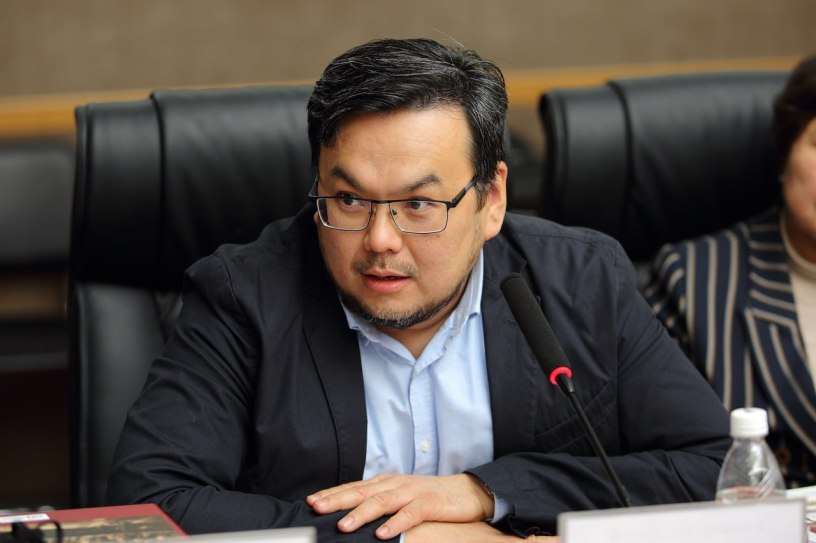
Esen Usubaliev
The 62nd Munich Security Conference has concluded in Munich, attended this year by the heads of 60 states and governments, as well as representatives of 50 international organisations, including the UN, the EU, the OSCE, NATO, ASEAN and others. Since 2022, the Munich conferences have featured annual strategic consultations on the theme of ‘How to achieve global dominance for the Western community’. These discussions are typically couched in vague terms, which this year relate to “the crisis of the international order, the strengthening of Europe’s defence and security architecture, and support for Ukraine”.
Otherwise, the conference focused on a wide range of issues — from de-escalating tensions in the Middle East, linked to the situation in Gaza and around Iran, to climate and energy security. But despite the diversity of the issues discussed, maintaining transatlantic unity in the face of regional and global threats was the matter of greatest concern to conference participants.
On an order that never was
The ‘unipolar moment’, as the period of US (and Western) dominance following the collapse of the USSR is commonly known, did not last long. Perhaps exactly until Russian President Vladimir Putin’s famous speech at the Munich Security Conference in 2007. At that time, Russia refused to stand by silently while the West took unilateral and high-handed steps to reshape the world order, and launched a process of internal revival and the restoration of its lost standing in international relations. This move by Moscow significantly accelerated other countries’ drive, first and foremost, towards technological sovereignty and progress.
All of today’s problems in international relations — the disintegration of states, wars, conflicts, the spread of Nazism and nationalism, extremism, terrorism and many other processes — are a direct consequence of the US’s unwillingness to recognise the irreversible process of the formation of new centres of influence in the world. It was precisely under such conditions that the Western ‘rules-based order’ was born, justifying the dictates of power and unilateral actions at its own discretion. It swept aside unwelcome peoples and governments in its path for the sake of its primary goal: the global domination of the US and its allies. The “order” was justified precisely as long as it effectively served the aims of American foreign policy. And the fact that it also benefited Europeans was merely an added bonus of the vassal-like transatlantic relationship. But, ironically, the EU only found out after the event, without prior consultation, that it no longer suited the Americans in the context of the emergence of new global centres of power. This is precisely why the destruction of transatlantic unity is perceived by Europeans as so tragic and painful, and this was particularly evident at this year’s Munich Conference.
In search of their place
The US President’s actions regarding Venezuela, Iran, Cuba, Yemen, Syria, Nigeria, threats against Mexico and Colombia, as well as his desire to bring Canada and Greenland into the fold, are seriously alarming the rather degraded minds of European politicians. So much so that earlier, at the World Economic Forum in Davos, the German Chancellor promised to “protect Denmark and Greenland from threats emanating from Russia”. At the current conference, however, Merz noted that the rules-based order no longer exists, and that “the transatlantic partnership appears to have lost its self-evident nature”, whilst at the same time expressing hope for its practical re-establishment. However, in practical terms, a weak Europe is precisely what the Americans do not need.
At the previous conference in Munich, US Vice-President JD Vance criticised Europe on every conceivable issue, noting that Europeans should take the initiative in managing their own security. At this conference, US Secretary of State Mark Rubio noticeably softened his tone, acknowledging that both the US and the EU had made mistakes by believing that liberal values, a free economy and a rules-based global order would replace national interests. Now, however, the US is ready once again to “take on the task of renewal and revival, guided by a vision of the future” and, according to Rubio, can do so both with and without its European partners.
Of course, the US does not plan to abandon Europe entirely. It is no coincidence that Rubio, in his speech, highlighted the inextricable link between the US and the continent, rooted in shared origins, history, Christian faith and culture, as well as the sacrifices made ‘in the name of a shared civilisation’. Broadly speaking, the US is reiterating that it needs strong allies with whom to build a renewed alliance and reform the global world order. Indeed, the US Secretary of State’s speech was replete with examples relating to significant periods in the history of Western civilisation, as well as key episodes of 20th-century history, with a particular focus on the victory in the confrontation between the West and the East.
The messianic tone of Rubio’s speech, imbued with a particular vision of the role of the US and European civilisation in the fate of humanity, broadly corresponds to the mindset of the Republican Party’s ideologues and Trump himself. Given the nature of this speech, one might assume that the State Department expected it to be of fateful significance for transatlantic unity, much like the effect of Winston Churchill’s speech, which called for the English-speaking nations on both sides of the Atlantic to unite in the struggle for shared civilisational values. A sort of Fulton speech, but now addressed to the whole of Europe. The problem, however, is that contemporary European politics and its leaders are in a state of profound moral and intellectual decline, and, despite the absence of serious criticism of the EU in Rubio’s speech, it cannot be said that all the problems of transatlantic unity have been resolved.
Peace in Europe and the fate of the world
The conference revealed that Europeans do not want peace and, by refusing to engage in reasoned dialogue, are stubbornly insisting on providing even greater financial aid to Ukraine and continuing the policy of ‘exhausting Russia’. The heads of European diplomacy and the European Commission, Kallas and von der Leyen, in various ways, raised the spectre of war with Russia, called for the rearmament of Europe and spoke of the importance of supporting Ukraine. President Zelenskyy himself, in his speeches and comments, has done everything to ensure that achieving peace in Ukraine is as difficult a task as possible, both for himself and for the US and its European allies.
Nevertheless, with each passing year, the Munich conferences reflect the realities of international security less and less, and are steadily reduced to discussions of problems within the Euro-Atlantic community. And the rift is there; and if it is not obvious now, it is inevitable in the near future.
It is unlikely that Europe will regain its position as an independent centre of power in the future multipolar world. Especially given the impossibility of securing affordable energy and natural resources for itself. And it cannot be ruled out that in the future world order, the EU will simply be a passive part of the American sphere of influence. This is particularly true in the context of the inevitable formation of new institutions and mechanisms for ensuring regional and international security following the end of the military conflict in Ukraine.
The Munich Conference revealed that behind the façade of general unanimity and consensus in presenting a united front for shared civilisational values lie serious problems regarding the integrity of the Euro-Atlantic community. Europe has not yet realised its main strategic miscalculation — the key to its security and stable development lies in strengthening ties on the Eurasian continent, and not across the Atlantic.
Usubaliev E. PhD, Dean of the Faculty of International Relations at the Jusup Balasagyn Kyrgyz National University
 Центр международно-политических исследований Факультета международных отношений КНУ им. Ж. Баласагына.