
By: Esen Usubaliev, PhD, Dean of the Faculty of International Relations and Oriental Studies, KNU
Abstract: As the global order undergoes a fundamental shift, the 25th SCO Summit serves as a critical catalyst for change. The article examines the strategic outcomes of the summit, the evolving role of the «Global South,» and the significance of the Kyrgyz Republic’s chairmanship in navigating a multipolar world.
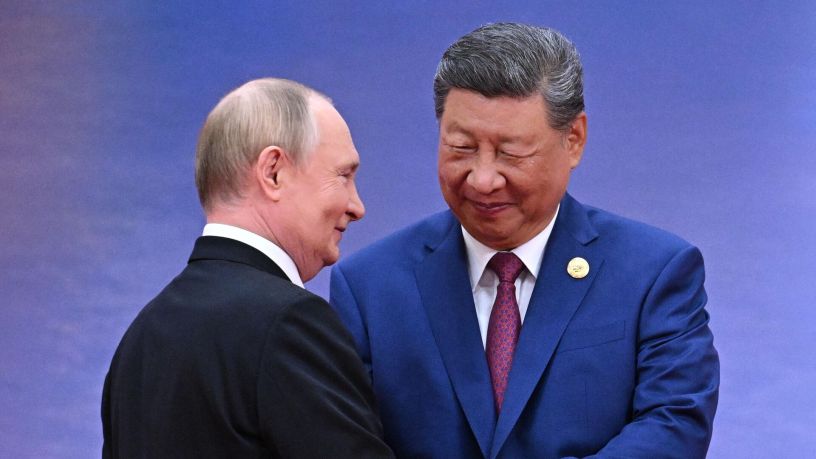
In early September, the centre of global politics and diplomacy shifted temporarily to the East – to the Chinese city of Tianjin, where an unprecedented number of heads of state and representatives of international organisations, including the UN Secretary-General, gathered to attend the 25th summit of the Shanghai Cooperation Organisation. Equality among heads of state remains an unshakeable principle for the host country, yet one could not fail to notice the particularly warm reception given to Chinese President Xi Jinping and Russian President Vladimir Putin.
For the first time in seven years, Indian Prime Minister Narendra Modi visited China; his visit can be seen as the most significant step in recent times towards improving relations with the PRC. The cordial bilateral meeting between the leaders of India and China, as well as the group photograph of Putin, Xi Jinping and Modi holding hands, caused a sensation in the Western press. The collective West saw in these handshakes the collapse of hopes not only to disrupt the emerging Sino-Indian dialogue, but also to prevent strategic cooperation between the three powers, which could alter – and is already altering – the world order. It is already evident that the changes in international relations over recent years have set in motion an irreversible process of forming a multipolar world, in which countries such as Russia, China and India play a leading role.
However, these changes are impossible without the support of the global majority, and the growing number of SCO dialogue partners is already shaping a new international model of relations, where equality and consensus in decision-making are among the most important principles. The existence of a space free from the economic and political dictates of a single country or group of countries – which is rightly considered to be the territory of the SCO member states – arouses interest among other countries and prompts them to seek opportunities to join the ‘Shanghai Process’, which has acquired global significance over the years.
Thus, the arrival at the summit of leaders from the Association of Southeast Asian Nations (ASEAN) member states – Vietnam, Cambodia, Laos, Malaysia and Myanmar – is particularly noteworthy, as they have very recently faced increased US tariffs. It is difficult to predict the further consequences of the US’s unilateral economic measures for world trade and the financial system led by the US and the collective West; however, countries are increasingly seeking alternatives, and this search is leading them to the SCO, the EAEU and BRICS, which are forming the framework for new political, trade and economic relations.
The baton of stability and growth
For Kyrgyzstan, this summit also holds particular significance – this year, it assumes the chairmanship of the organisation. Sadyr Zhaparov emphasised that Kyrgyzstan, “as a state that stood at the very origins of the SCO, views this as an opportunity to give new impetus to the organisation’s development, to strengthen its global role, and to promote the further deepening of friendship and good-neighbourliness”. The SCO development priorities highlighted by the President concern ensuring long-term stability, and Kyrgyzstan will step up collective efforts aimed at countering threats and security challenges facing SCO member states. At the same time, another principle relates to realising the potential for economic cooperation within the SCO and regional economic integration, including the establishment of an effective financial mechanism for the organisation, such as the SCO Development Bank, the Development Fund and the Investment Fund.
The “Shanghai direction” of Kyrgyzstan’s foreign policy currently represents one of the key vectors of the country’s diplomatic activity in safeguarding national interests. The SCO space, uniting 10 countries of the Eurasian continent, opens up opportunities to enhance the Kyrgyz Republic’s international political significance and participate in addressing issues of international and global scale.
The implementation of projects within the SCO framework is of strategic importance both for Kyrgyzstan and for the entire SCO region. In particular, Zaparov noted that the Centre for Combating Transnational Organised Crime in Bishkek, established on Kyrgyzstan’s initiative, “will make a significant contribution to the common cause of combating the illegal activities of international organised criminal groups within the SCO region”.
Historical foundations of the world order
The Tianjin Summit can be described as historic in many respects, particularly given the number of anniversaries coinciding with its timing. Thus, in the statement by the Council of Heads of SCO Member States marking the 80th anniversary of the end of the Second World War and the founding of the UN, the fundamental principles developed following the conclusion of the bloodiest and most destructive military conflict in human history were once again emphasised. The statement, addressing the issues of the glorification and resurgence of Nazism and attempts to falsify history, notes that “preserving and objectively reflecting the historical truth about the Second World War is a necessary condition for preventing such tragedies and strengthening peace, security and cooperation”.
The SCO Summit once again reminds the international community, and in particular the collective West, of the historical foundations of the world order. At the same time, this world order is underpinned by the central role of the UN — “a unique intergovernmental organisation within which the necessary forms of cooperation for maintaining peace and security have been established”. In other words, the SCO member states consistently advocate for the preservation of the UN’s central coordinating role as the foundation of a just world order, but, perhaps, in today’s circumstances, new methods and tools are required to uphold this role.
Prospects for global governance
At the summit, the President of the People’s Republic of China put forward an initiative on global governance. Xi Jinping proposed “working with all countries to jointly build a more just and equitable system of global governance, as well as to build a community with a shared future for mankind”. This idea is based on the principles of sovereign equality, respect for international law, a commitment to multilateralism, the promotion of a people-centred approach, and a focus on concrete action. Like the global security initiative, the global governance initiative is universal in nature and does not conflict with existing forms of bilateral or multilateral cooperation; however, these principles represent directions that will gradually be filled with more concrete content. And China invites its partners to work on this together.
The Russian President supported the idea of creating a new, more effective and functional system of global governance, noting its relevance in the context of some countries’ desire to impose their will in international relations. It is clear that the Chinese initiative does not call for the creation of a centre for de facto world governance; rather, it is likely to involve more effective mechanisms (and possibly international institutions) that will be able to implement initiatives on a global scale. The fact that these may ultimately become institutions of a new world order cannot be entirely ruled out.
Victory parades in Asia
The participation of the leaders of Russia and China in victory parades in Europe and Asia is a triumph of historical justice and a fundamental act celebrating the victory of the forces of good over the global forces of evil — fascism, Nazism and militarism. Any attempts to portray the historical cooperation between Russia and China as some sort of conspiracy against third countries are mere speculation and an attempt to diminish the significance of the victory in the Second World War, especially when the collective West, in pursuit of its own interests, prefers to ignore the historical facts and lessons of that war, rehabilitating ideas of racial superiority and reviving neo-Nazi ideology in Eastern Europe. Crimes against humanity have no statute of limitations, and this is yet another lesson that the West will, perhaps, have to learn.
E. Usubaliev, PhD, Dean of the Faculty of International Relations and Oriental Studies.
The Jusup Balasagyn Kyrgyz National University
 Международный центр актуальных проблем внешней политики Факультета международных отношений Кыргызского Национального Университета им. Ж. Баласагына